Diabetic ketoacidosis (DKA) is a serious complication of type 1 diabetes that occurs when the body doesn’t have enough insulin. Recognizing the signs early and acting quickly is essential to prevent life-threatening consequences.
This content is not medical advice. Always consult your endocrinologist, doctor or diabetes care team before making any changes to your diabetes treatment or daily management.
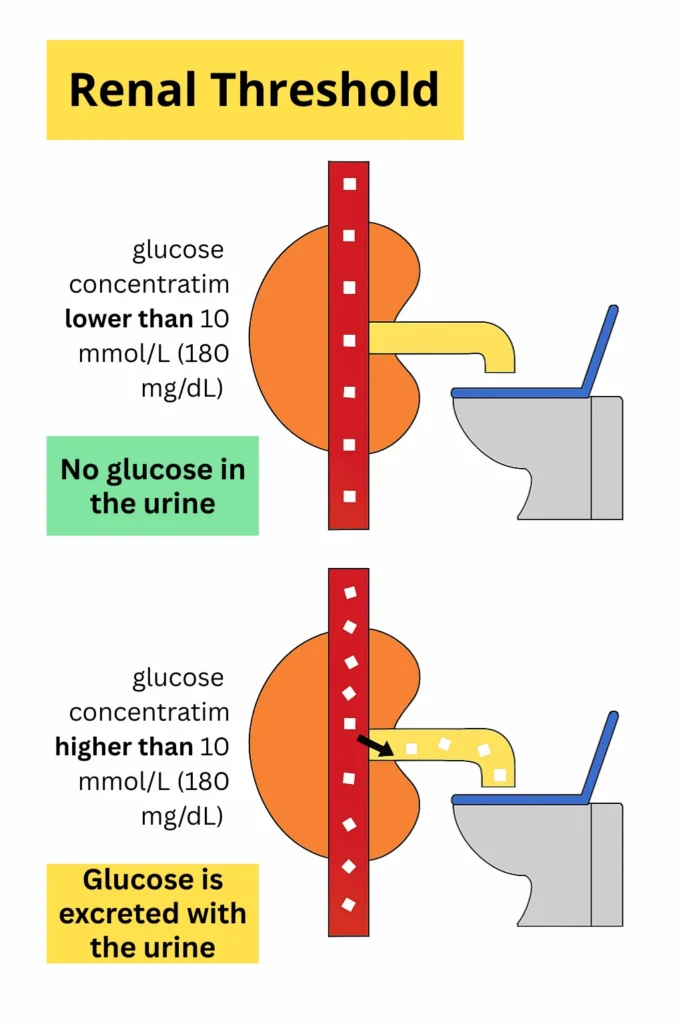
When blood glucose exceeds 10 mmol/L (180 mg/dL) the kidneys can no longer reabsorb all the glucose, and it begins to appear in the urine.
What Is Diabetic Ketoacidosis (DKA)?
Diabetic ketoacidosis, or DKA, is a serious complication of type 1 diabetes that happens when the body doesn’t have enough insulin to use glucose for energy. Without insulin, the body starts breaking down fat instead, producing ketones – acids that build up in the blood and can become dangerous at high levels.
When too many ketones accumulate, the blood becomes acidic, which can affect vital organs like the brain, heart, and kidneys. DKA requires urgent medical attention and, if left untreated, can be life-threatening.
While DKA can develop quickly sometimes within just a few hours it’s often preventable with regular glucose and ketone monitoring, proper insulin use, and understanding early warning signs.
Blood sugar can rise occasionally (for example, after a meal), but if it stays high for longer periods or happens frequently it can cause serious damage to blood vessels, eyes, kidneys and nerves.
As ketones build up in the blood, they can also appear in the urine. This is an early warning sign that the body doesn’t have enough insulin and needs attention.
Causes of DKA
In people with type 1 diabetes, DKA usually happens when there isn’t enough insulin for the body to use glucose properly. When that occurs, the body switches to burning fat for energy, releasing acids called ketones into the bloodstream.
Several common situations can trigger DKA:
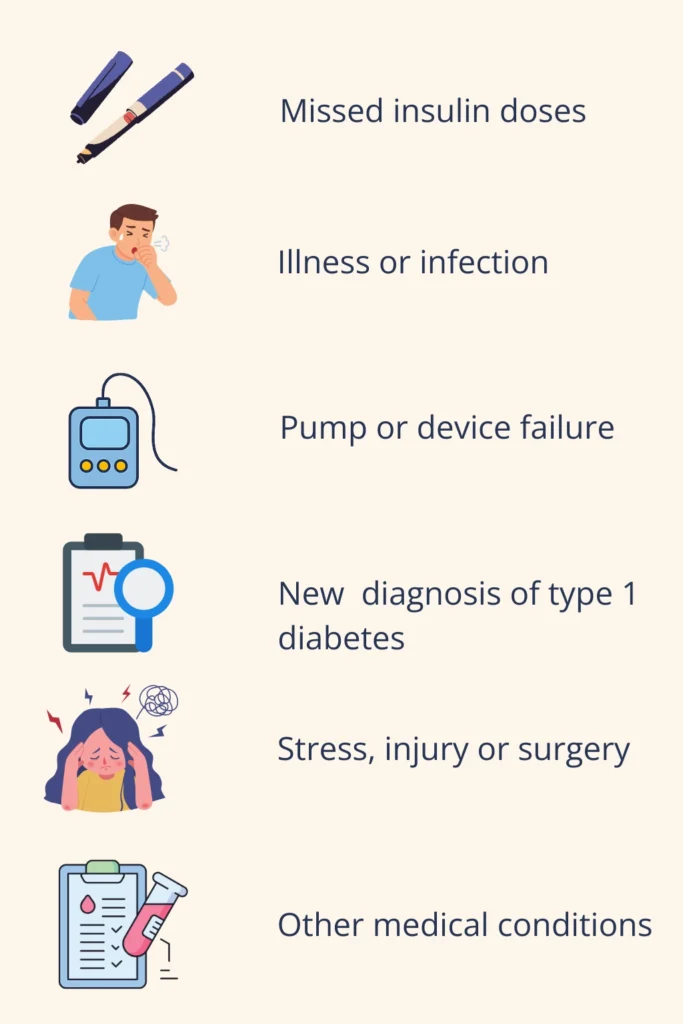
Missed or insufficient insulin doses – forgetting a dose, incorrect calculations, or insulin delivery problems (like a blocked pump or dislodged infusion set).
Illness or infection – when you’re sick, your body releases stress hormones that make blood sugar rise and increase insulin needs.
Pump or device failure – technical problems with insulin pumps, tubing, or infusion sets can quickly lead to high glucose and ketones.
New diagnosis of type 1 diabetes – DKA is sometimes the first sign before diabetes is diagnosed.
Stress, injury, or surgery – physical or emotional stress raises hormones that oppose insulin.
Other medical conditions – such as heart attack or certain medications (like steroids) that raise blood sugar levels.
It’s important to remember that DKA isn’t anyone’s fault. Even with careful diabetes management, it can happen suddenly. What matters most is recognizing the warning signs early and knowing how to respond.
Signs and Symptoms
DKA can develop gradually over several hours, but symptoms may become severe very quickly. Recognizing them early is essential to prevent complications.
Early symptoms:
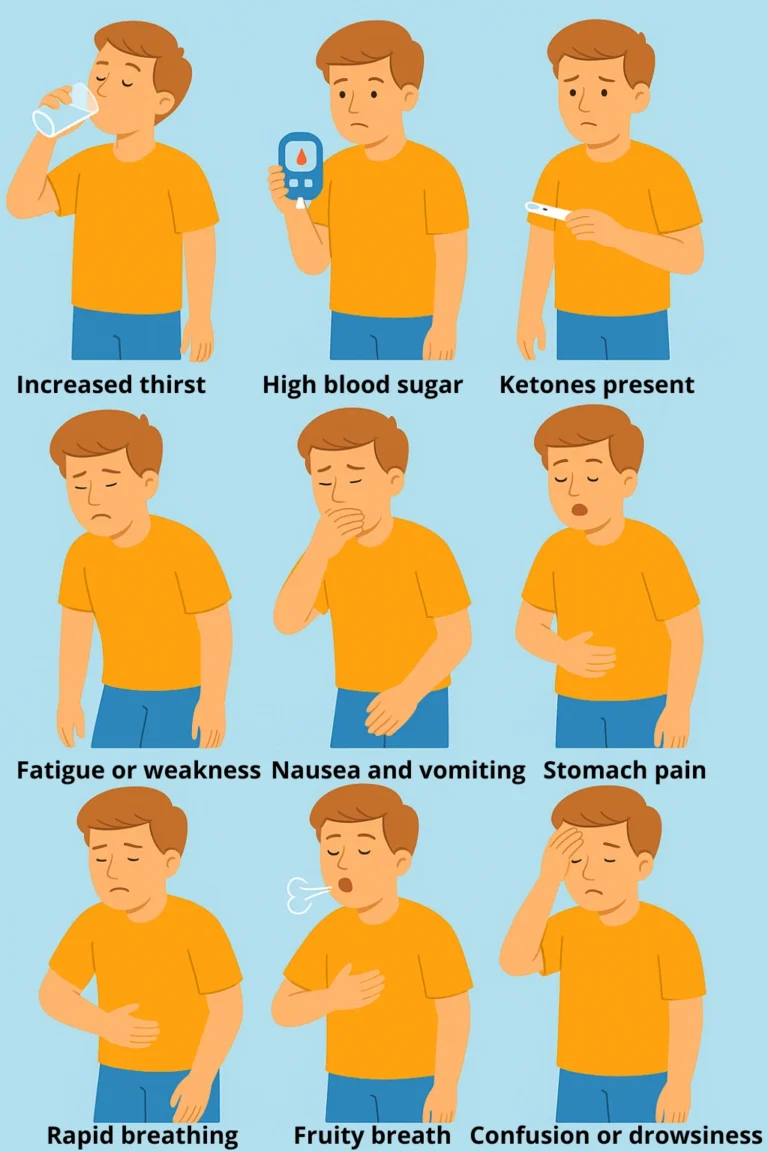
Increased thirst and dry mouth
Frequent urination
High blood sugar levels
Presence of ketones in urine or blood
Fatigue or weakness
Progressive or severe symptoms:
Nausea and vomiting
Stomach pain
Deep or rapid breathing (Kussmaul breathing)
Fruity or sweet-smelling breath
Difficulty concentrating, confusion, or drowsiness
If you or your child have high blood sugar together with nausea, vomiting, or ketones — it’s important to test frequently, stay hydrated, and contact your healthcare team.
What to Do if You Suspect DKA?
If you suspect diabetic ketoacidosis (DKA), it’s important to respond promptly and follow your care plan. Even mild DKA can worsen fast within a few hours, so early steps can make a big difference.
1. Check blood sugar levels – If your glucose is above 13.3 mmol/L (240 mg/dL), start testing more frequently.
2. Test for ketones – Use a blood or urine ketone test.
If ketones are moderate or high, you may be entering DKA.
If you’re using an insulin pump, check for tubing or infusion set issues.
3. Take a correction dose of rapid-acting insulin –Follow your healthcare team’s instructions for correction dosing. If you’re unsure or vomiting, do not skip insulin,contact your diabetes team immediately.
4. Stay hydrated – Drink plenty of water or sugar-free fluids to help flush out ketones and prevent dehydration.
5. Avoid exercise – Do not exercise when ketones are present it can make DKA worse.
6. Recheck blood glucose and ketones after 2 hours – If levels remain high or you feel unwell (nausea, vomiting, abdominal pain, confusion), go to the nearest emergency department.
How to Check for Ketones?
You can test for ketones using a urine test strip or a blood ketone meter.
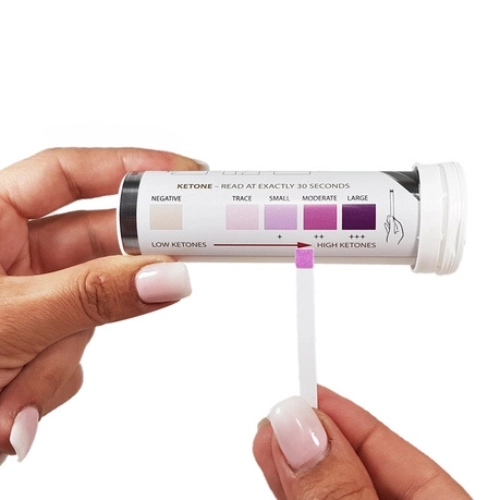
Urine ketone strips change color based on ketone level — light pink means small, dark purple means high.
Blood ketone meters (similar to glucose meters) show the level digitally, in mmol/L (mg/dL).
Check for ketones whenever blood sugar is above 13.3 mmol/L (240 mg/dL), or when you’re sick, tired, or nauseous.
If ketones are moderate or high, follow your diabetes plan: take insulin, drink plenty of water, and contact your healthcare team.
Urine ketone test strips change color based on ketone levels — from negative to high. They help detect early signs of diabetic ketoacidosis (DKA).
A blood ketone meter shows real-time ketone levels in mmol/L and helps monitor and prevent diabetic ketoacidosis (DKA).
Diabetic ketoacidosis (DKA) is a medical emergency. If you have high blood sugar with nausea, vomiting or rapid breathing, check for ketones immediately and contact your healthcare provider or go to the nearest emergency room.
DKA usually develops after a period of high blood sugar (hyperglycemia) that isn’t corrected in time. Learn more about recognizing and managing high blood sugar.
Our T1D Warriors are children, parents of children with diabetes, and individuals living with type 1 diabetes who share their personal experiences to inspire and support others. Every story, every blog post, and every piece of advice you find here comes from someone who has truly lived it — with honesty, courage and a whole lot of heart. Together, we’re building a community where real-life experience truly makes a difference.
Want to inspire others with your T1D journey? Become a T1D Warrior and share your story.