
Diabetes and Sleep
Sleep is essential for everyone, but for people with diabetes, it can sometimes feel complicated. From blood sugar changes to CGM alarms, restful nights can be challenging, but with the right habits, better sleep is possible.
This content is not medical advice. Always consult your endocrinologist, doctor or diabetes care team before making any changes to your diabetes treatment or daily management.
Why Sleep Matters and How Diabetes Can Disrupt It?
Sleep is one of the quiet heroes of diabetes care. During the night, the body resets restoring energy, repairing cells, and balancing blood sugar levels.
When that rhythm is interrupted, mornings can start with higher glucose, extra fatigue, and more stress.
For people living with diabetes, nights can sometimes be unpredictable. High blood sugar may cause thirst and frequent trips to the bathroom, while lows can bring sweating, shaking, or a racing heartbeat that pulls you out of deep sleep.
Continuous glucose monitors and insulin pumps bring safety and reassurance, but their alarms and alerts can also make it harder to rest. And for many parents, worry about overnight lows often means more checking and less sleeping.
Sleep may never be perfect every night, but understanding what disrupts it and finding small ways to make it better can help you wake up stronger and more in balance.
Stay in Range Overnight
Continuous glucose monitors and insulin pumps can be a lifesaver at night, but their alerts can also interrupt much-needed rest.
Finding a balance between safety and sleep takes a bit of experimenting and adjustment.
Here are some ideas that can help:
Review your alarm settings. If you’re constantly being woken up by minor highs or quick drops that don’t last, try adjusting your alert thresholds slightly.
Keep only the essential alarms on. You can set less critical alerts to silent or vibration mode during the night.
Calibrate and charge your devices early in the evening. That way, you’re less likely to get alerts while you’re trying to sleep.
Talk with your care team about safe overnight ranges that let you rest without worrying.
A night of sleep without constant beeping doesn’t mean you’re ignoring your diabetes — it means you’re managing it wisely.
Managing CGM and Pump Alarms
Continuous glucose monitors and insulin pumps can be a lifesaver at night, but their alerts can also interrupt much-needed rest.
Finding a balance between safety and sleep takes a bit of experimenting and adjustment.
Here are some ideas that can help:
Review your alarm settings. If you’re constantly being woken up by minor highs or quick drops that don’t last, try adjusting your alert thresholds slightly.
Keep only the essential alarms on. You can set less critical alerts to silent or vibration mode during the night.
Calibrate and charge your devices early in the evening. That way, you’re less likely to get alerts while you’re trying to sleep.
Talk with your care team about safe overnight ranges that let you rest without worrying.
Sometimes CGM sensors can show inaccurate readings, especially if you’ve been sleeping on the sensor site or if your glucose is changing quickly. If an alert doesn’t match how you feel or numbers seem off, check your blood sugar with a fingerstick to confirm before treating.
Building Healthy Sleep Habits
Good sleep doesn’t just happen it’s something we can prepare for. A few small changes in your evening routine can make falling asleep and staying asleep much easier.
Here are some simple ways to build better sleep habits:
Keep a regular schedule. Try going to bed and waking up at the same time each day, even on weekends.
Put screens away early. Blue light from phones and tablets can make it harder for the body to release melatonin — the hormone that helps you fall asleep.
Create a calm environment. Keep the room dark, cool, and quiet. A light blanket and steady temperature help prevent glucose-related sweating or chills.
Limit caffeine and heavy meals. Coffee, energy drinks, and big dinners close to bedtime can keep your body alert when it should be winding down.
Add some gentle movement during the day. A walk, stretch, or light exercise can improve both glucose control and sleep quality.
How Much Sleep Do You Need?
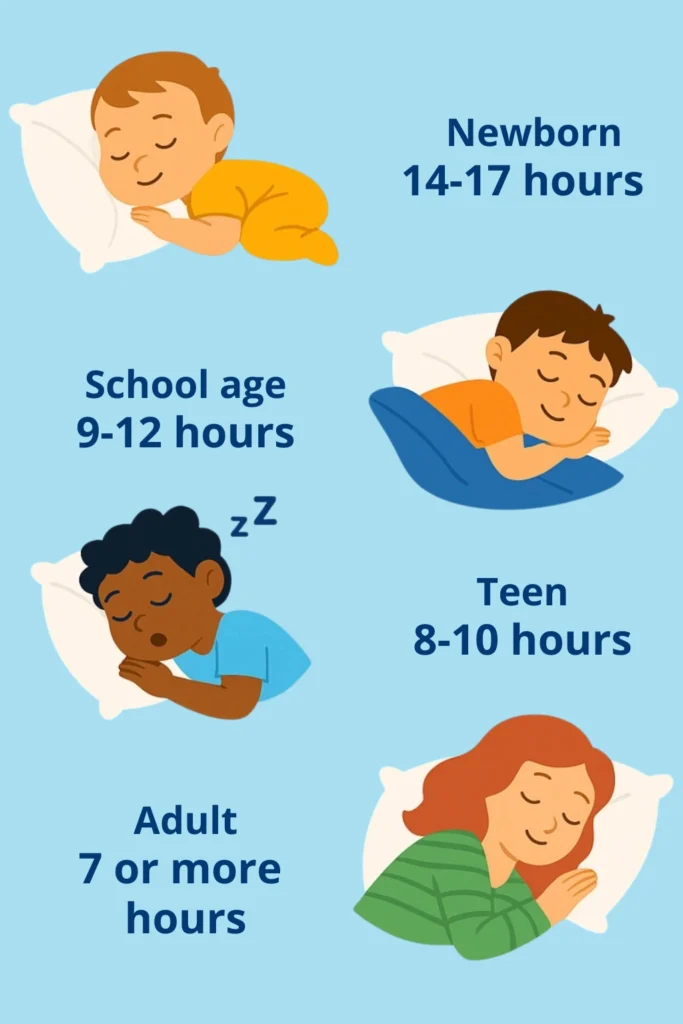
According to the Centers for Disease Control and Prevention (CDC) , the amount of sleep recommended varies by age:
Newborns (0–3 months) need about 14 to 17 hours of sleep each day.
Infants (4–12 months) should get 12 to 16 hours, including naps.
Toddlers (1–2 years) typically need 11 to 14 hours, also including naps.
Preschoolers (3–5 years) benefit from 10 to 13 hours of sleep daily.
School-aged children (6–12 years) should get 9 to 12 hours of sleep each night.
Teens (13–17 years) need around 8 to 10 hours, though many don’t get enough due to busy schedules and screen time.
Adults (18–60 years) should aim for 7 or more hours of quality sleep.
Adults aged 61–64 years are recommended 7 to 9 hours, while those 65 and older generally need 7 to 8 hours of sleep per night.
Getting the right amount of rest helps regulate glucose levels, improve insulin sensitivity, and support both physical and mental well-being.
Exercise and Sleep Connection
Being active during the day helps your body relax at night. Regular movement improves insulin sensitivity, balances blood sugar, and supports deeper, more refreshing sleep.
Just be mindful of when you exercise. Late-night workouts can raise body temperature and release adrenaline, which might make it harder to fall asleep. Morning or afternoon activity usually works best — it helps your body wind down naturally by evening.
If you notice that your glucose drops a few hours after exercising, especially overnight, try a small snack before bed or talk with your care team about adjusting your insulin. With the right balance of activity and rest, both your days and nights become smoother.
Check for Sleep Apnea
Sometimes poor sleep isn’t just about blood sugar. Sleep apnea — a condition where breathing repeatedly stops and starts during the night can cause fatigue, morning headaches, and higher glucose levels.
It’s often linked to type 2 diabetes, but research shows that people with type 1 can experience it too. If you snore loudly, wake up gasping, or feel unusually tired even after a full night’s sleep, talk to your doctor about a sleep study or screening.
Treating sleep apnea can improve both your rest and your blood sugar control helping you wake up more refreshed and in range.
Join as a T1D Warrior

Our T1D Warriors are children, parents of children with diabetes, and individuals living with type 1 diabetes who share their personal experiences to inspire and support others. Every story, every blog post, and every piece of advice you find here comes from someone who has truly lived it — with honesty, courage and a whole lot of heart. Together, we’re building a community where real-life experience truly makes a difference.
Want to inspire others with your T1D journey? Become a T1D Warrior and share your story.