
Sports and Activities
Being active is an important part of life with diabetes. Knowing how sports and exercise affect blood sugar and how to prepare helps you stay confident, safe and enjoy every game or activity.
This content is not medical advice. Always consult your endocrinologist, doctor or diabetes care team before making any changes to your diabetes treatment or daily management.
Why Exercise Matters for People with Diabetes?
Physical activity plays a big role in managing type 1 diabetes. Exercise helps the body use insulin more efficiently, lowers blood sugar levels, strengthens the heart, and improves overall well-being.
Regular movement also helps reduce stress and build confidence especially for children and teens learning to balance diabetes with everyday life.
And remember, many professional athletes successfully live and compete with type 1 diabetes from Olympic swimmers and football players to marathon runners. With the right preparation and monitoring, diabetes doesn’t have to limit anyone’s potential.
How Exercise Affects Blood Sugar?
Exercise affects everyone differently, but in general:
Aerobic activities (like swimming, cycling, running, or dancing) tend to lower blood sugar because muscles use more glucose for energy.
Anaerobic or intense activities (like sprinting or weightlifting) can temporarily raise blood sugar because of the release of stress hormones such as adrenaline and cortisol. These hormones trigger the liver to release glucose into the bloodstream.
This means that sometimes blood sugar may rise during or right after intense activity then drop later, especially during recovery or sleep. Monitoring and understanding these patterns is key to staying safe.
Before Exercise
Before starting any activity, take a few minutes to prepare.
Check your glucose level 15–30 minutes before exercise.
If your blood sugar is below 100 mg/dL (5.6 mmol/L), have a small snack containing fast-acting carbs (like juice or glucose tablets).
Avoid starting if your blood sugar is above 250 mg/dL (13.9 mmol/L) and you have ketones.
Discuss with your diabetes team whether to adjust your insulin dose — sometimes it’s necessary to reduce bolus insulin before planned activity or lower basal rates on an insulin pump.
Be prepared: Carry quick carbs, water, your glucose meter or CGM, and wear a medical ID bracelet. If your child is exercising, make sure teachers or coaches know about their diabetes and how to help if needed.
During Exercise
During physical activity, keep an eye on your blood sugar especially if the exercise lasts longer than 30 minutes.
Monitor glucose regularly. If you use a CGM, pay attention to trend arrows and alerts.
Adrenaline spikes can sometimes raise your blood sugar mid-activity, especially during competitive games or excitement that’s normal. Keep monitoring; levels often stabilize after exercise.
Stay hydrated. Drink water every 20–30 minutes to avoid dehydration, which can make glucose readings unreliable.
Watch for lows. If you feel shaky, dizzy, or weak, pause, test your glucose, and take fast-acting carbs.
If swimming or contact sports are involved, secure your devices properly or remove them according to your healthcare provider’s advice.
After Exercise
After finishing, keep monitoring for several hours especially overnight.
Exercise can make your body more sensitive to insulin, leading to delayed hypoglycemia even 6–12 hours later.
Check your glucose more often after sports.
Eat a balanced post-activity meal or snack with carbohydrates and protein.
If you use a pump, some athletes temporarily reduce basal insulin for several hours after exercise.
For kids, consider a small bedtime snack after an active day to prevent nighttime lows.
If your blood sugar rises after very intense exercise, don’t rush to correct wait and monitor; sometimes the adrenaline effect wears off naturally.
Tips for Different Activities
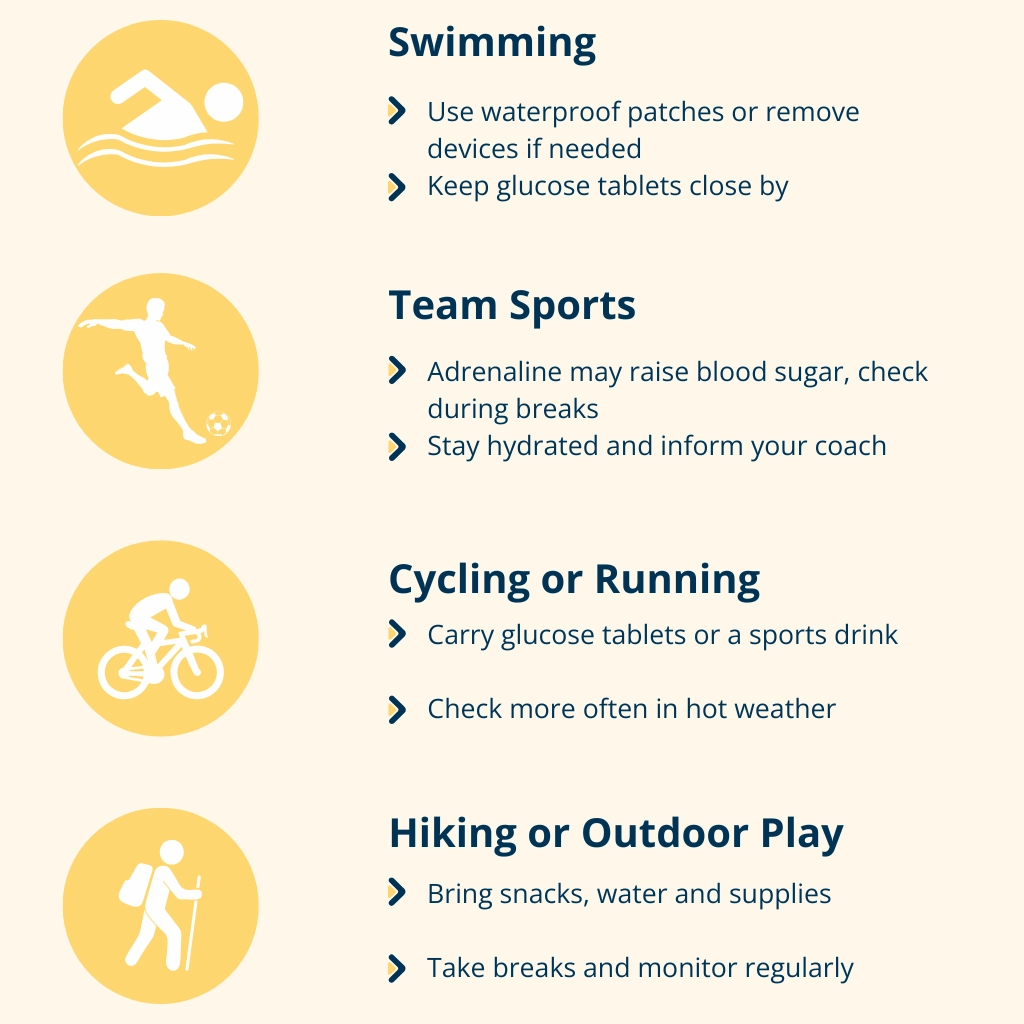
Swimming
Use waterproof patches for your CGM or pump, or remove devices if advised. Keep glucose tablets nearby and monitor before and after swimming.
Team Sports (Football, Basketball, Volleyball, Handball)
Adrenaline and excitement can raise blood sugar during the game. Keep checking levels during breaks and rehydrate often. Always let the coach know about your diabetes.
Cycling or Running
Carry glucose tablets or a sports drink. If it’s hot, check more frequently dehydration can make glucose rise unexpectedly.
Hiking or Outdoor Play
Bring extra snacks, water, and diabetes supplies. Physical effort plus heat can cause faster drops take breaks and check often.
Protecting Your Devices During Sports
Sweat, movement, and water can affect how well your CGM sensors and insulin pumps stay in place.
Here are a few ways to keep them secure and working properly:
Use extra adhesive patches or medical tape to help sensors and infusion sets stick during exercise.
For swimming or water sports, choose waterproof covers or arm bands to protect devices.
Always dry your skin well before applying a new sensor or infusion set.
If a device loosens or falls off during play, check your blood sugar manually and replace it when safe.
Taking a minute to protect your devices helps ensure accurate readings and lets you focus on enjoying the game, not worrying about your equipment.
Safety and Support
No one manages diabetes alone and that’s especially true during sports.
Make sure your coaches, teammates, and friends know what to do in case of low blood sugar. Show them where your glucose tablets or glucagon kit are kept, and explain when to use them.
Wearing a medical ID bracelet or necklace is a simple but powerful safety measure it speaks for you if you can’t.
Physical activity is just one part of daily diabetes care.
Next, explore Managing Diabetes During Illness to learn how to handle blood sugar changes when you’re not feeling your best.
Join as a T1D Warrior

Our T1D Warriors are children, parents of children with diabetes, and individuals living with type 1 diabetes who share their personal experiences to inspire and support others. Every story, every blog post, and every piece of advice you find here comes from someone who has truly lived it — with honesty, courage and a whole lot of heart. Together, we’re building a community where real-life experience truly makes a difference.
Want to inspire others with your T1D journey? Become a T1D Warrior and share your story.