
Emotional Side of Diagnosis
A type 1 diabetes diagnosis changes life from the ground up, not only physically but also emotionally. It triggers a range of feelings – from shock and fear to sadness and hope that shape the daily life of the child and the family.
This content is not medical advice. Always consult your endocrinologist, doctor or diabetes care team before making any changes to your diabetes treatment or daily management.
How a Type 1 Diabetes Diagnosis Affects Emotions?
Type 1 diabetes is more than a medical condition — it’s a daily companion that demands constant attention. Testing, counting carbs, adjusting insulin, and dealing with unpredictable blood sugar swings can feel like carrying an invisible weight. Over time, this can lead to emotional fatigue, stress, or even burnout.
Beyond the physical demands, blood sugar highs and lows can directly affect mood and energy, sometimes sparking irritability, anxiety, or sudden sadness. And while the medical side can be taught, the emotional side often catches people off guard. It’s not just the person with diabetes who feels it — parents, siblings, and close friends can also experience worry, frustration, and helplessness.
In the sections below, we’ll explore the different ways emotions can show up after a type 1 diabetes diagnosis:
Immediate reactions
Ongoing emotional challenges
Mental health conditions linked to T1D
Positive emotional adaptations

Immediate Reactions (first few days or weeks)
Shock and disbelief – The diagnosis can feel surreal, as if it’s happening to someone else. It often takes time for the mind to catch up with the new reality.
Fear and anxiety – Worries about health, insulin injections, and what life will look like moving forward are common.
Sadness or sense of loss – Mourning the life “before diabetes,” when meals, activities, and routines felt simpler.
Ongoing Emotional Challenges
Diabetes distress – Feeling worn down by the constant responsibility of monitoring and treatment.
Burnout – Emotional exhaustion that may lead to skipping checks or neglecting self-care.
Mood changes – Irritability, sadness, or anxiety triggered by rapid blood sugar fluctuations.
Positive Emotional Adaptations
Resilience – Building mental strength over time, even in the face of setbacks.
Acceptance – Finding a sense of peace in living with type 1 diabetes.
Empathy – Gaining a deeper understanding of others’ struggles and offering compassion.
People with type 1 diabetes often experience mood changes due to fluctuations in blood sugar levels, stress, and the daily challenges the condition brings. Understanding that these changes are part of both a physiological and emotional response can help in accepting and managing them more easily.
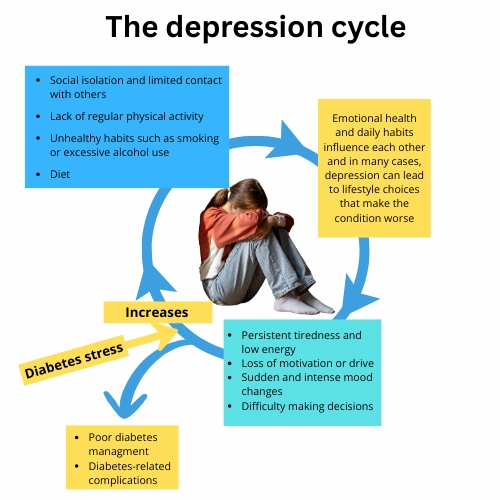
Mental Health Conditions Linked to T1D
Living with type 1 diabetes can increase the risk of certain mental health challenges. The daily responsibility of managing the condition from constant decision-making to dealing with unpredictable blood sugar levels — can take a toll on emotional wellbeing. Some of the most common conditions include:
Depression – persistent feelings of sadness, hopelessness, or loss of interest in daily activities. People with T1D are about twice as likely to experience depression compared to those without diabetes.
Anxiety disorders – ongoing worry about blood sugar numbers, fear of hypoglycemia (hypos), or concern about future complications.
Eating disorders – disordered eating patterns, sometimes related to strict food monitoring. In some cases, this can lead to diabulimia — deliberately skipping insulin to control weight.
Recognizing the signs early and seeking help from a healthcare professional can make a big difference. Mental health support is just as important as medical care in living well with type 1 diabetes.
The Role of Family and Friends
Support from family and friends can make a world of difference in coping with type 1 diabetes. Learning about the condition, showing empathy, and avoiding judgmental comments helps create a safe emotional space. Simple acts — like listening without rushing to give advice, offering help with daily tasks, or being there during difficult moments can ease feelings of isolation.
For parents, siblings, and close friends, it’s important to remember that your presence and understanding often matter more than any perfect words. Standing alongside your loved one, not just in medical care but in emotional moments too, helps build resilience and strengthens the bond between you.
Psychological Support
Emotional health is an essential part of living well with type 1 diabetes. Speaking with a psychologist, counselor, or therapist can help you process feelings, develop coping strategies, and prevent burnout. Many diabetes clinics have mental health professionals on their teams, and online support communities can be a valuable addition.
If you feel persistently sad, anxious, or overwhelmed, seeking professional help is not a sign of weakness it’s a step toward a healthier, more balanced life. Just as you would treat high or low blood sugar, it’s equally important to care for your emotional wellbeing.

Join as a T1D Warrior

Our T1D Warriors are children, parents of children with diabetes, and individuals living with type 1 diabetes who share their personal experiences to inspire and support others. Every story, every blog post, and every piece of advice you find here comes from someone who has truly lived it — with honesty, courage and a whole lot of heart. Together, we’re building a community where real-life experience truly makes a difference.
Want to inspire others with your T1D journey? Become a T1D Warrior and share your story.